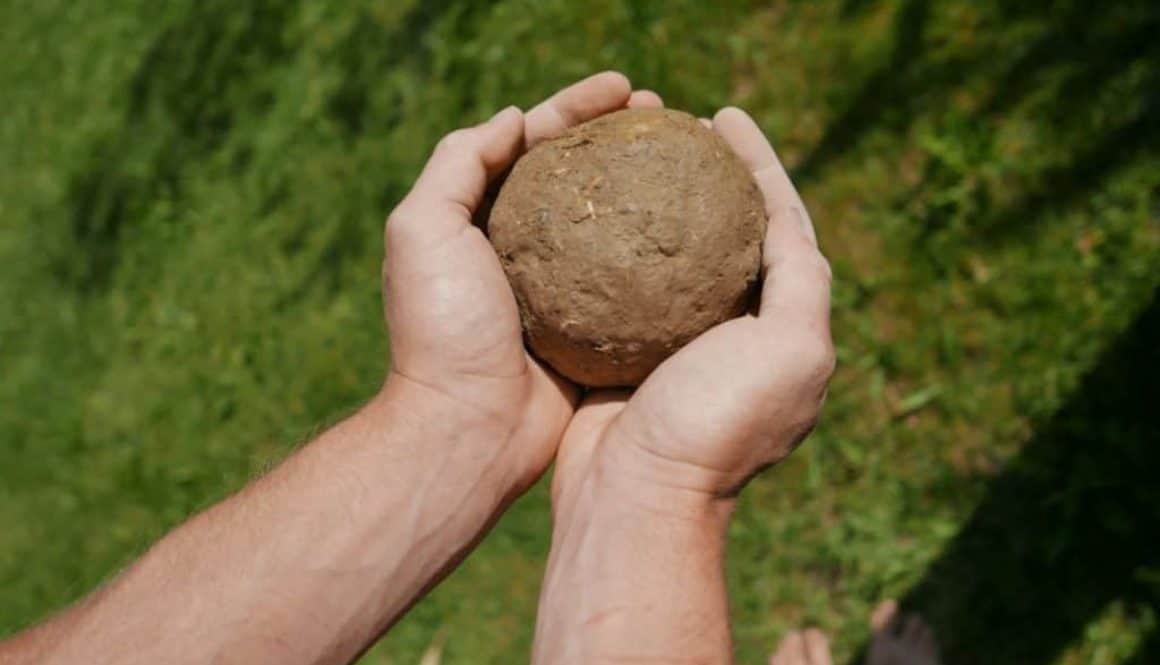
Dorodango’s seem to be a craze (borderline obsession) that earthen builders seem to find themselves drawn to which seems natural when you realise the beauty of applying presence and patience with earth to create unbelievably shiny and precious beautiful yet deeply meaningful and seemingly pointless objects. The Japanese art form, Hikaru Dorango is literally translated as shiny mud dumplings which is precisely what they are. The origins of the craft trace back to a school playground in Kyoto where children were found to have started making them.
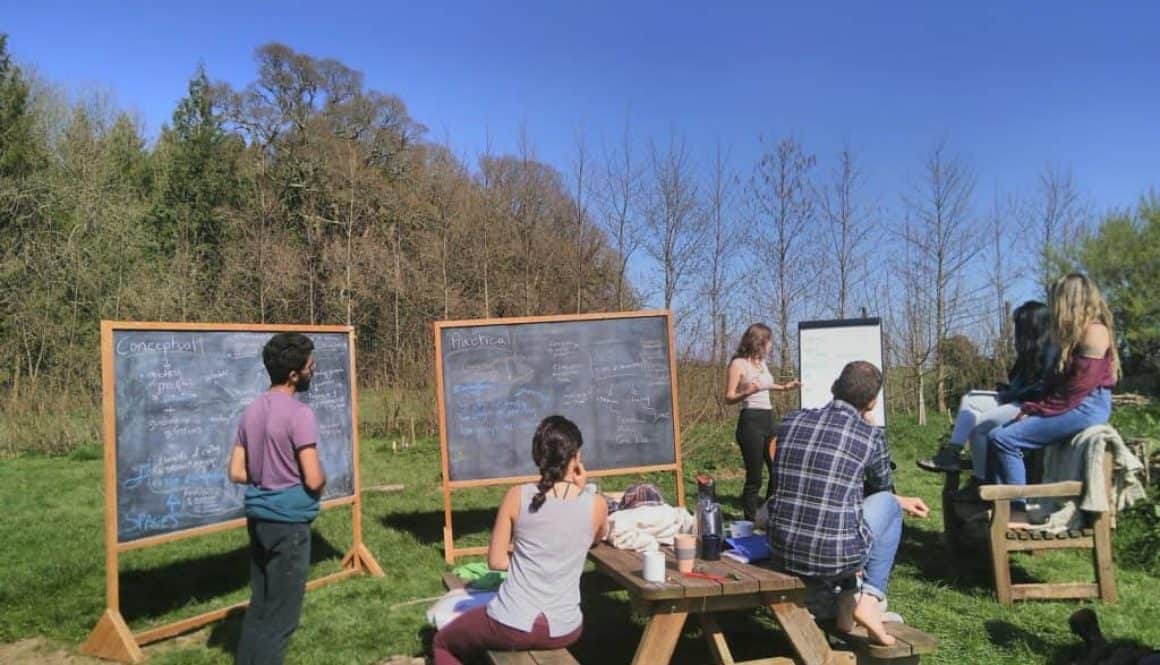
I was drawn to Dorodangos as a tool to study conscious making as part of my research titled thinking with my hands, feeling with my heart. During my first encounter with the craft, I realised the immediate feedback from my inner state of being with the lack of lustre in the balls. Once I’d realised this, I took a walk and released the grasping of ego and mind, and then returned to work on the ball with a renewed sense of presence. Not only did a beautiful shine emerge, but it came with ease and joy. This started my experiments in working with Doradangos in my research and lead me onto studying the effects that making has on the coherence of heart and mind. This part of my indicative research was done using the biofeedback device developed by the Heart Math Institute which I used to facilitate a conscious making experience with a group of 15. A page from my research is below.
I believe making Dorodangos to be a transformative experience for anyone, any age. Below are some of the reasons why I believe so…
To connect to yourself inward, whilst connecting outward into the world
To be in the process, and to allow a flow state to emerge through mindfulness in the process
To find joy in the unfolding of beauty
To find perfection in imperfection
To work with the head, heart and hands
To be engaged with a living process
To be process-oriented opposed to goal-oriented
To be in contact with the web of life and to live in the moment with a direct connection to the web of life
If you are interested in me hosting a workshop with your forest school, business, university, knitting club etc. I’d be more than happy to. contact me here
As the earth began to warm from the first of the sharp spring sun falling in the foothills of the Himalayas, I travelled to the village of Dhanaari, a 40-minute walk from the nearest town of Bir, 2000m above sea level. As I hiked with my bags up towards the mudhouses on the hillside, I was filled with excitement and angst of what was to come. I paused on a fallen log to catch my breath and begin to settle into the land that would become my home for the next year. As I sat here, ignorant of what experiences lay ahead, I dreamed into who I wanted to be and become.
I had arrived at Dharmalaya, an intentional educational community devoted to compassionate living. I was here as one of the first international architecture interns and I had come to learn to live a life that was in harmony with nature; my inner nature and all that lies beyond. Living in a community I shared my life with many beautiful people from India and further afield. I found learning and working in the community was simultaneously nourishing, challenging and hugely rewarding. Life at Dharmalaya was centred around the wisdom traditions of the region and in day-to-day life, we put into practise the Indian ethical principles of karuna (compassion), ahimsa (non-harming), metta (loving-kindness) and seva (service). And in this manner, I learned and practised living responsibly and sustainably whilst cultivating awareness and reverence for the sacredness of all of life.
Leading a life that was deeply embedded in place and community taught me a different way to live and be in this world. Living (including working) consciously in a more present way, enabled me to connect deeper to the natural cycles, rhythms and patterns of life around and within me, and in doing so life became more vibrant and fulfilling. I began to take myself and the world less seriously which paradoxically made more space for me to care for the things that I feel mattered the most.
The first few months here were filled with new experiences daily as I participated in workshops centred around compassionate and sustainable living, earthen construction and silent meditation. This time was filled with fast and slow learning on many fronts exploring our most innate but largely forgotten human values. Through living the values of kindness, service to others and compassion daily, I soon grasped how these were to be applied in the way we design and build.
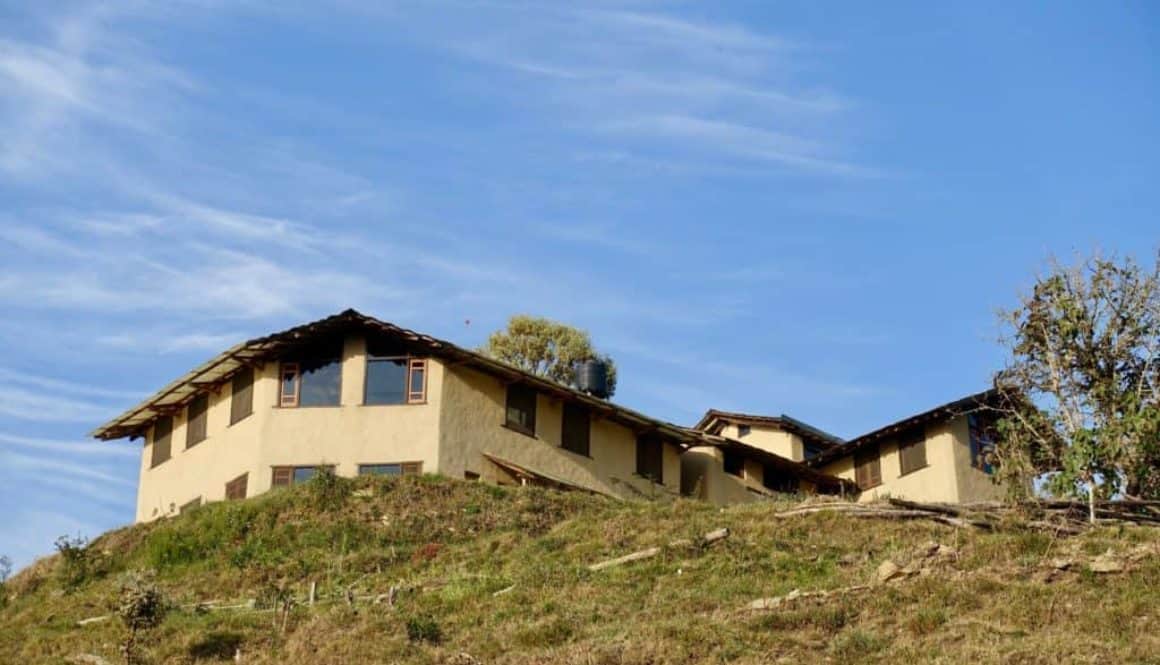
I worked on two major building projects during this period, a two-story duplex and a meditation cottage. These buildings were made using the vernacular methods of the region using stone, adobe, timber and bamboo but were designed with the comforts of the modern person in mind. The majority of materials come from the land itself but the addition of a few market materials ensure that the buildings are earthquake-proof. This way of building was revived by renowned Indian architect and one of Dharmalayas influential faculty, Didi Contractor. These techniques have sadly been replaced in the region due to the perceived social ideas that having a concrete house is more advanced and developed than having a mud house, and sadly people in the village are trading their healthy earthen homes for concrete homes. This short thinking is sadly causing harm to the inhabitants as harmful mould thrives on concrete in this climate. Dharmalaya works in keeping this information and wisdom that’s been rooted and evolved with the place and people for thousands of years alive. Building in such a low-impact manner can be seen as doing so in the most compassionate way for the land and people. I see the potential in these methods and philosophies as being a powerful catalyst towards cultural, economic, social and ecologically regenerative practices in this bioregion.
Examples of Vernacular in the Kangra Valley
Inhabiting a space that embodied the values of compassion, equality and kindness was the perfect teacher in reflecting the qualities that I wanted to cultivate. I am hugely grateful to all who were involved in making my time here so nourishing and beautiful, you are all family.